Minos - Welcome Back, Dungeon Keeper
I break down the Greek mythology behind Minos, draw parallels to Dungeon Keeper, and dig into what makes this indie dungeon-defense worth your time.

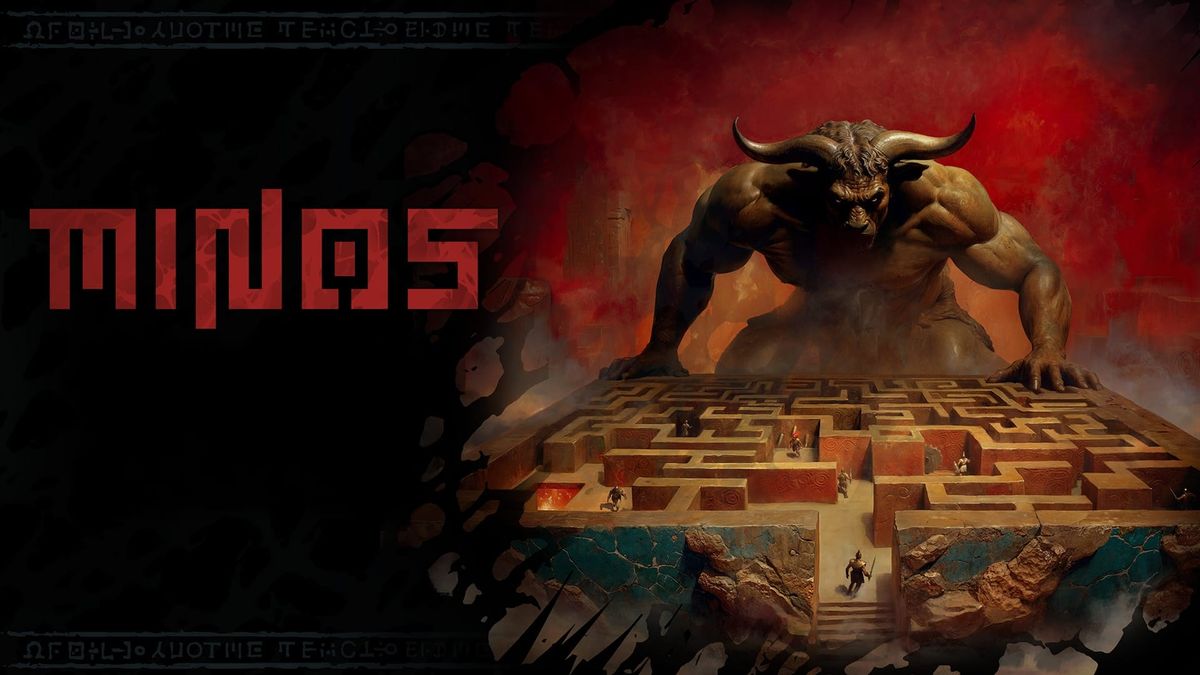
Dungeon Keeper was a unique game, well-ahead of its time. Made by Bullfrog Studios and the legendary Peter Molyneux, it was a dungeon-building game where you played the bad guy — amassing wealth, recruiting minions, and thwarting heroes who dove into your lair to steal your hard-won gold. To this day, it's one of my favorite games ever made.
Artificer, the developers of Minos, were clearly also fans of Bullfrog's classic. But Artificer put a twist on the formula with a dash of Greek mythology for flavor: you're cast as the Minotaur, Asterion, building underground mazes to protect yourself from adventurers hunting you down to make a name for themselves.
In Greek mythology, Minos was one of three sons of Zeus and Europa, adopted by King Asterion of Crete, and later ascended the throne.
When Minos' son Androgeos won the Panathenaic Games, the Athenian king Aegeus sent him to fight a bull at Marathon, where he was killed. Enraged, Minos laid siege to Athens and called on Zeus to punish the city with plague and famine. The God of Thunder obliged.
With no other option, the Athenians submitted — but at a steep price: every nine years, Athens had to send seven boys and seven girls to Crete as sacrifices to the Minotaur, a monster confined to a labyrinth built by a man named Daedalus. The Minotaur was eventually defeated by the hero Theseus, aided by Minos's own daughter, Ariadne. Sources: Wikipedia, Mythology.net
It's a fascinating twist, then, that in Minos you play the Minotaur under the name Asterion — the same name as the mythological King of Crete who adopted Minos — with Daedalus acting as your mentor and guide. There are clear time jumps too, since you start the game as a teenager or young adult.
Visually, the game has an art style reminiscent of World of Warcraft, but less chunky, with every element in the world having rough, painterly strokes throughout, as if touched by a paintbrush. I especially love the backgrounds: vast underground caverns where other mazes are being built or destroyed in real time. Tasteful use of depth of field adds to the sense of scale and texture of each level.
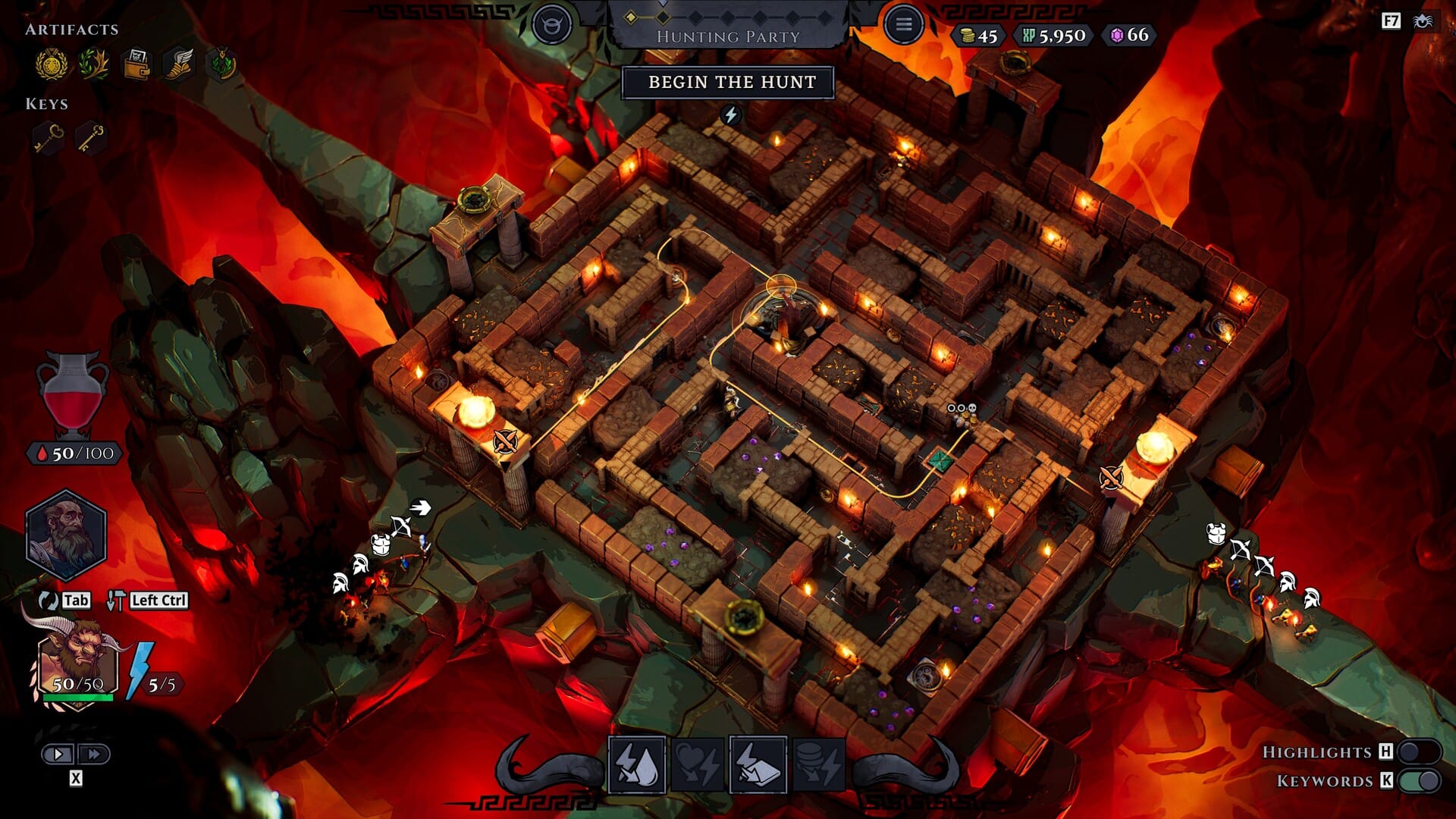
Gameplay unfolds in rounds, with waves of heroes trying to reach the heart of the maze. If they succeed, they can hunt down Asterion directly — and if he's killed, it's game over for that run. Between waves, you place traps and reshape parts of your dungeon. The game shows you the path each group of heroes will take to the heart of the labyrinth, and while you can't redesign the entire maze, you have enough control to put your own spin on how you defend against each wave. You also directly control Asterion, and beyond traps, you can fight back physically when heroes get close.
The whole thing has strong Dungeon Keeper vibes. And while Asterion isn't portrayed as a villain from the outset, whether he becomes one is yet to be seen. The story mode also feels roguelike in that you can't truly die. Defeat sends you back to a hub area, where you keep all progression and unlocks and decide where to go next. A full roguelite mode is currently in beta, and I can see that mode giving the game serious replayability.
Minos is a lot of fun — easy to pick up and quick to grasp. I'm excited to see how deep the systems get and the many nasty ways to punish the adventurers risking it all in our labyrinth.
Anyhoo, that's it for now.
Time to play a few more rounds of Minos.
Stay frosty.